
Field Notes · Apr 2026 · No. 05
The Closer You Get to Hardware
The hardest engineering problems don’t get easier the closer you get to hardware, they get more specific. This month we’re sharing a first-of-its-kind system deployment, three active federal programs, and a technical white paper seven years of real system builds in the making. If any of it connects to what you’re working on, we’d love to hear from you.
·
7 min read
Geothermal
ARPA-E
SOFC/GT
Stay connected
Get new editions in your inbox
Subscribe for occasional updates on Czero projects, events, and engineering insights.
Occasional updates from Czero. Unsubscribe at any time.
Project · Geothermal
Czero & Quixik Support GTO Technologies’ EGS Development
Geothermal energy delivers what many other renewables cannot: continuous, baseload, carbon-free power independent of weather or time of day. The next-generation geothermal sector is accelerating rapidly, advances in drilling, reservoir stimulation, high-temperature downhole tools, and subsurface characterization are making it more technically and commercially viable.
Enhanced Geothermal Systems (EGS) take this further by engineering the subsurface heat exchanger directly. Rather than relying on naturally occurring hydrothermal reservoirs, EGS injects high-pressure fluids and proppant to develop a fracture network, enabling water to circulate and use the Earth as a downhole heat exchanger for power production at the surface, dramatically expanding where geothermal can be developed.
GTO Technologies, a Colorado School of Mines spinout founded by Dr. Will Fleckenstein and Patrick Mays, is developing a next-generation conformance control system for EGS that addresses a key limitation of conventional plug-and-perf methods: the lack of effective conformance control. Their system introduces a regulator that enables precise control of flow through each fracture, allowing for more uniform water distribution across the fracture network, essential for maximizing power production and extending system life.
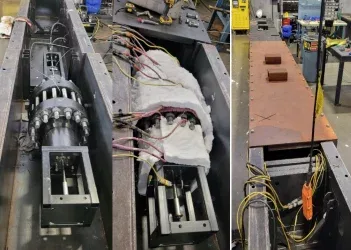
The design maintains full-bore flow to minimize wellbore friction and reduce parasitic losses, and incorporates a three-position sleeve with a pump-down actuator or 225 °C tractor (also developed by GTO) to regulate flow between wells while reducing overall size, cost, and complexity compared to traditional approaches.
Czero and our in-house machining and fabrication team at Quixik are supporting GTO’s Generation 2 sleeve development through design, analysis, manufacturing support, and testing. Our work focuses on developing a robust, field-ready architecture through rigorous modeling, detailed engineering, and validation.
Czero has brought world-class engineering and problem-solving to the complex problems of flow control, seal design, and system manipulation in an extremely harsh operating environment.
Patrick Mays, Co-founder & COO, GTO Technologies

Federal · ARPA-E
Three Active ARPA-E Programs
Czero is currently engaged as a subawardee across three federally funded ARPA-E programs spanning energy storage, emissions reduction, and e-fuels synthesis.
JOULES 1K, led by Johns Hopkins University, is targeting energy storage systems with densities exceeding 1,000 Wh/kg (a 4× improvement over conventional batteries) using a Direct Liquid Fuel Cell operating on Liquid Organic Hydrogen Carriers. Phase I demonstrated the concept at lab scale; Phase II scales to a 1 kW demonstration system. Czero leads integration, build, and test. PI: Chao Wang, Johns Hopkins.
AMPLIFY, led by Marquette University, focuses on reducing methane slip from natural gas-fired lean-burn engines using a novel non-premixed, prechamber-enabled combustion process. Phase I proved the concept on a single-cylinder Caterpillar engine; Phase II targets a large-bore 2-stroke engine widely used in natural gas transport. Partners include Cooper Machinery Services, Dumarey, and the University of Wisconsin–Madison. PI: Adam Dempsey, Marquette.
OFF GRID, led by Nexceris, aims to transform stranded renewable energy into hydrocarbon-rich liquids for fuels and chemicals via a novel methanol synthesis approach. A key innovation is the integration of catalyst packaging with a water-separating membrane that overcomes conventional equilibrium limits and enables single-pass conversions exceeding 90%. Partners include Heatpath Solutions, Tonkomo, Molecule Works, and Washington State University.
White Paper
SOFC/GT Hybrid Power System
This white paper documents what a 50 kWe Solid Oxide Fuel Cell / Gas Turbine hybrid power system actually takes to build, integrate, and test, developed under ARPA-E’s INTEGRATE Phase II program alongside Nexceris and Brayton Energy. The architecture produces electricity from natural gas at substantially higher efficiency than conventional turbines alone, and at scale is a strong candidate for powering data centers without relying on grid interconnects.
The system integrates a pressurized SOFC with a Brayton-cycle gas turbine, targeting 70%+ fuel-to-electrical efficiency. Key design parameters include 850 °C SOFC operation, 930 °C turbine operation, and 90,000 rpm turbomachinery, with high-temperature anode recirculation, partial on-anode reforming, and dilute combustion of anode tailgas for secondary power generation.
Czero led system modeling, architecture design, detailed mechanical design, fabrication, controls development, and testing across the program. Our methodology included high-fidelity dynamic modeling in MATLAB/Simulink, FEA and CFD to support and iterate on mechanical design decisions, and Software-in-the-Loop testing to evaluate startup and shutdown transients and fault scenarios before hardware commissioning.
Resource
New: Startup One-Pager
We’ve been in the room with a lot of early-stage teams this month, at NREL IGF, the ARPA-E Summit, and CERAWeek, and the same question keeps coming up: how does working with Czero actually look? We put together a one-pager that spells it out, from a short initial call to assess fit through detailed scope development, disciplined execution, and proposal support for government-funded programs. In almost all cases, IP developed is assigned to our clients.
With 450+ projects completed, 50+ subawards, and a 16,000 ft² facility with in-house build and test capabilities, we’re built to act as an extension of your team, taking on as much or as little of the work scope as needed, and scaling on the fly. If you’re a startup or innovation team navigating a hard engineering problem, reply and we’ll tell you honestly whether we’re a fit.

Partnership
Node Climate Partnership
Node Climate is accelerating the deployment of first-of-a-kind climate infrastructure by connecting project financiers, EPCs, and offtakers in one collaborative space, with a clear mission to increase the pace and success rate of FOAK climate projects.
We’ve joined as a trusted engineering service provider. FOAK projects require deep technical expertise and collaborative problem-solving, an area where Czero has been contributing for years.
Where to find us
We're hiring
Keep this edition
Download the PDF version
Save or share this April 2026 edition of Czero Field Notes.